- Video Production
- Video Making Tips for Beginners
- How to become a videographer
- What is gear acquisition syndrome
What Is Gear Acquisition Syndrome? Stop Buying, Start Creating
Gear Acquisition Syndrome (GAS) is the nagging belief that buying a new camera, lens, or accessory will instantly make your videos professional.
It’s a trap that swaps practice for purchasing.
Your phone or starter camera is enough -- master storytelling, lighting, and composition first.
Stop researching specs, start recording, and let your skills, not your shopping cart, define your work.
Key Takeaways: What is gear acquisition syndrome?
- Your gear is not the bottleneck -- your skills are. Master storytelling, lighting, and composition with whatever camera you already own (yes, even your phone) before chasing an upgrade.
- Every camera has compromises. There is no perfect setup; stop searching for one and start working with what fits your actual workflow.
- Gear Acquisition Syndrome is a confidence issue disguised as a shopping habit. The urge to buy often masks creative insecurity, perfectionism, or fear of the vulnerable work of actually creating.
- No one cares what camera you used. Clients, audiences, and viewers connect with emotion and story -- not sensor specs or lens brands.
- New gear loses value immediately; skills appreciate forever. Money spent on practice, workshops, or simply time behind the lens yields returns no accessory box can match.
- Pause before you purchase. Implement a 30-day waiting rule. Ask: "Does this solve a specific problem I am actively facing right now?" If the answer is no, you're chasing dopamine, not progress.
- Limitations breed creativity. Some of the most iconic films were shot on "outdated" equipment. Constraints force you to innovate; unlimited options lead to paralysis.
- Stop researching and start recording. The best cure for GAS is completing a project with the gear gathering dust on your shelf. The shopping cart should never replace the shot list.
Imagine this: you're just starting out with video production. You're excited, full of ideas, and ready to create.
But then, you stumble upon a forum where everyone's talking about "this latest camera", "that must-have lens", and "this essential stabilizer". And you hear this same talk on YouTube, social media, and in face-to-face encounters with your acquaintances.
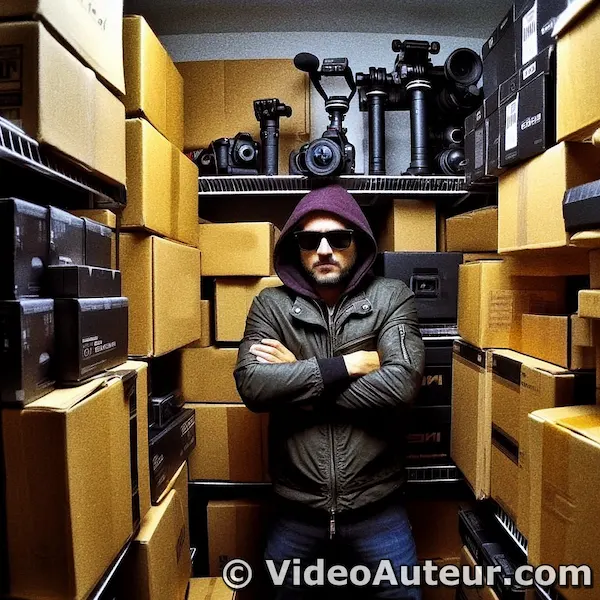 What is the gear collecting syndrome?
Suddenly, your trusty old camera feels inadequate. You start wondering if your creative vision will be limited by your current equipment.
That nagging feeling, that itch to constantly upgrade, might just be the beginning of what is gear acquisition syndrome.
I know this feeling! Worse still, even if you don’t want it in your life (I don't want it either!), somehow, you're still affected because many around you are infected with this obsession like a spreading disease.
Does this sound familiar to you? If so, welcome to the world of Gear Acquisition Syndrome (GAS) -- a phenomenon where the desire for new gear overshadows the joy of creating.
Let's explore this common phenomenon together, how to recognize it, how to avoid it, and -- if you have it -- how to overcome it.
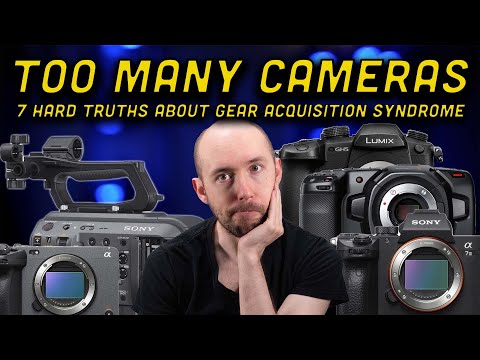
Video Key Takeaways -- Do I really need better gear to become a good videographer -- or am I just chasing shiny objects while neglecting my actual skills?
You don’t need better gear -- you need better skills.
Most beginners chase shiny gear while neglecting storytelling, lighting, and composition -- the real foundations of great video.
Master what you have first; your phone or entry-level camera can create stunning work if you focus on how you shoot, not what you shoot with.
The Heart of the Message: You Are Enough
The biggest takeaway is that your value as a creator comes from your storytelling, not your equipment.
You can spend years chasing the "best" gear, only to realize that no camera can fix bad storytelling, and no amount of expensive tech will suddenly make people care more about your work.
Key Lessons to Keep Close to Your Heart
1. Don't Get Swept Up in the Hype
Camera companies are very good at making us feel like we need the newest model to succeed.
They use exciting ads and famous influencers to make it seem like the latest camera is magic.
But remember, every new camera has flaws (like overheating or limitations), just like the ones before it. It's okay to ignore the noise and trust what you already have.
2. Bigger and Pricier Isn't Always Better
It's natural to think that a huge, expensive "cinema camera" will make us feel like "real" filmmakers.
But often, these cameras are just heavy, take a long time to set up, and can be tiring to carry.
Smaller, lighter cameras are often better for beginners because they let you move freely and focus on creating rather than struggling with weight.
3. Every Camera Has Compromises
This is a very comforting truth: No camera is perfect.
Whether it's battery life, low-light performance, or size, every single camera gives up something to gain something else.
Instead of looking for a mythical "perfect" camera, just ask yourself: "Does this fit my style and my workflow?" If it does, it's the right choice for you.
4. You Don't Need to Keep Up with Everyone Else
There will always be a new lens, a new light, or a new camera coming out.
Trying to chase every new release is a race you can never win, and honestly, you don't need to run it.
Your videomaking won't be revolutionized by buying the newest toy; it will grow through your practice and creativity.
5. Most People Won't Notice (or Care) What Camera You Use
This might be the most freeing point of all!
Clients, actors, and audiences generally don't know or care what specific camera you used. They care about the emotion in the scene and the quality of your story.
Success comes from the trust in your craft, not the size of your gear bag.
6. New Gear Won't Fix Your Videomaking
While new tools can be fun, they won't automatically make your videos look better.
A beautiful shot comes from good lighting, composition, and emotion -- things you can achieve with almost any modern camera.
When you look back at your old videos, you'll likely remember the story you told, not the specific model of camera you held.
7. Cameras Lose Value Quickly
Think of a camera like a new car: the moment you buy it, it starts losing value.
If you constantly buy and sell cameras trying to find the "one," you will likely lose money.
It's much kinder to your wallet to buy what you need, keep it for a while, and learn to master it.
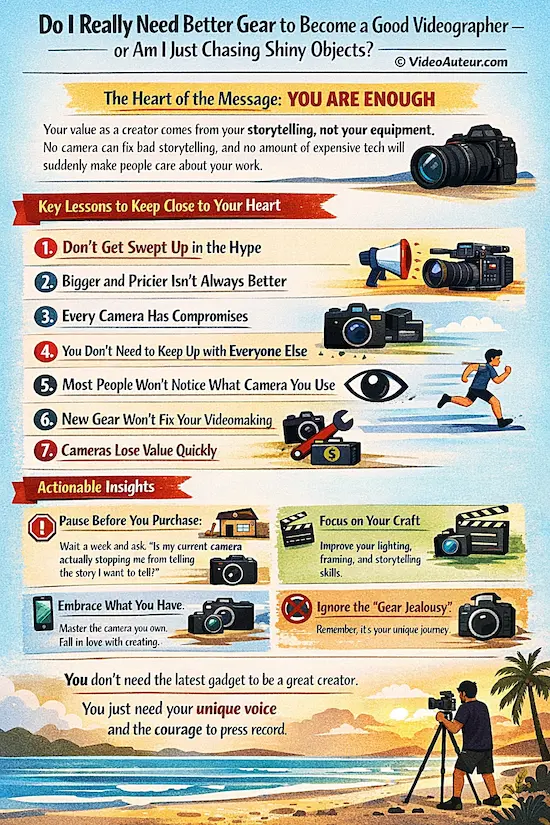
Actionable Insights
-
Pause Before You Purchase: Next time you feel the urge to buy a new camera, wait a week. Ask yourself, "Is my current camera actually stopping me from telling the story I want to tell?" Usually, the answer is no.
-
Focus on Your Craft: Spend the time (and money) you would have spent on new gear practicing your lighting, learning how to frame a shot, or writing a better script. These skills never lose value.
-
Embrace What You Have: Look at the camera or phone you currently own. It is capable of making something beautiful. Start there. Master it. Fall in love with the process of creating with it.
- Ignore the "Gear Jealousy": When you see others with fancy setups, remind yourself that their gear doesn't make them a better storyteller than you. You are on your own unique path.
Please remember that creating videos is a journey of expression, not a competition of who has the most expensive tools.
You don't need the latest gadget to be a great creator. You just need your unique voice and the courage to press record.
What is Gear Acquisition Syndrome in Videography?
Gear Acquisition Syndrome (GAS) is the compulsive belief that buying a new camera, lens, or accessory will instantly fix creative struggles or make your videos look professional.
It’s chasing hardware upgrades instead of practicing storytelling, composition, and lighting skills -- the real drivers of great video work.
Gear Acquisition Syndrome (GAS) in videography is that sneaky voice in your head whispering, “If only I had that new camera, lens, or gadget, my videos would finally look professional.” It’s the compulsive urge to buy more video making gear—even when your current setup works perfectly fine.
But GAS isn’t just about wanting shiny new tools. It’s the belief that the next purchase will magically fix your creative struggles, or transform your skills overnight.
 What is the gear buying syndrome in video production or videography?
You might catch yourself thinking, “This high-end gimbal will make my shots smoother,” or “If I upgrade to that full-frame mirrorless camera, clients will take me seriously.”
Sound familiar? (To me, personally, those are pesky thoughts!)
Why Videographers Are Vulnerable to GAS
Videographers face constant pressure from tech marketing pushing higher specs and new tools, making it easy to believe better gear equals better footage.
Because video relies on a complex chain of equipment -- cameras, lenses, lights, stabilizers -- there are simply more potential "weak links" to obsess over, distracting beginners from mastering fundamental storytelling and composition.
Videography thrives on technology, and the industry constantly dangles flashy upgrades in front of us—6K, 8K. (I think having 4K max suffices nowadays.) Cinematic autofocus. AI-powered stabilizers.
It’s easy to fall into the trap of thinking gear = talent. But here’s the truth: Great storytelling doesn’t come from a camera manual, or a flashy gear.
GAS often shows up in three ways:
- Camera and Lens Obsession
- Accessory Overload
- Software and Plugin Addiction
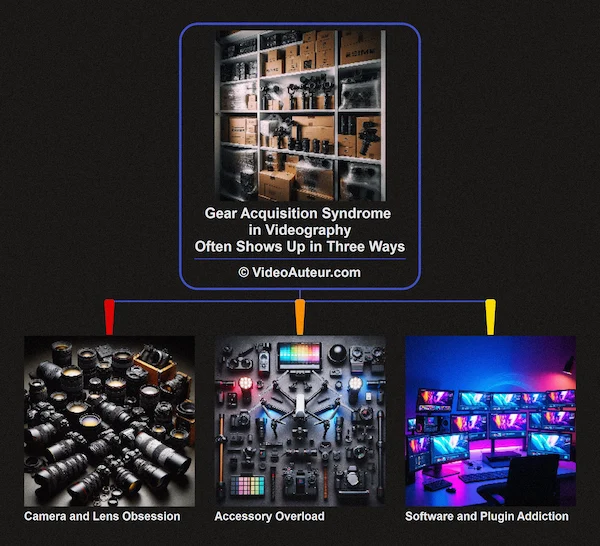 What is gear acquisition syndrome and how it manifests in videography.
1. Camera and Lens Obsession
- “My footage would look cinematic if I had that full-frame mirrorless camera.”
- “This expensive lens will finally give my videos a ‘film look.’”
- The reality? While gear can enhance your work (and make your life easier), no camera or lens fixes shaky storytelling, inauthentic performance, or poor lighting.
2. Accessory Overload
- Gimbals, drones, RGB lights… the list never ends.
- Each gadget promises to solve a problem: “This stabilizer will hide my wobbly hands!” (But there are shooters who just love to pose with their gimbals like a swashbuckler and take pictures and videos of themselves.)
- But constantly switching gear can distract you from mastering the basics, like framing or pacing. (I know some photographers who also shoot videos and seem to, still, lack skills in composing shots.)
3. Software and Plugin Addiction
- “If I buy this pricy color-grading plugin, my videos will go viral!”
- New editing tools feel like progress, but overloading your workflow with presets and effects often muddies your unique style.
What is the deeper problem with Gear Acquisition Syndrome (GAS)?
The deeper problem with GAS is that it delays actual filmmaking.
You chase gear instead of mastering fundamentals like lighting and storytelling.
Constant upgrading becomes a comfortable distraction from the vulnerable work of creating with what you already have -- and learning from imperfect results.
I think GAS, at its core, is a confidence issue disguised as a shopping habit.
It’s easier to blame your gear than to admit, “I need to practice more” or “I’m still figuring out my creative voice.” (I believe the latter is so true. I have a colleague who even thinks that the way to go is to blindly copy the styles of other people, and to buy the same gear others use.)
But here’s a secret seasoned practitioners know: Limitations breed creativity. Some of the most iconic films were shot on “outdated” equipment—because the filmmaker, not the gear, made them unforgettable.
Is Gear Acquisition Syndrome a Real Thing?
Yes, Gear Acquisition Syndrome is absolutely real.
It's the common, distracting urge to buy new gear instead of actually filming.
For beginners, remember: the best camera is the one you have with you. Mastering lighting and story will always beat a new lens; don't let the shopping cart replace the shot list.
You’re not imagining it. That nagging urge to buy just one more lens or that camera everyone’s raving about? It’s a shared struggle for countless shooters—and yes, it’s very real.
Spend a few minutes in filmmaker forums, YouTube comment sections, Facebook groups, or local camera clubs, and you’ll see stories like these:
“I bought this camera… and still feel like my work isn’t good enough.”
“I own three gimbals but barely use one.”
“Why do I keep watching gear reviews instead of actually filming?”
Gear Acquisition Syndrome is a cycle of hope (“This mic will make my audio perfect!”) followed by guilt (“Why did I spend rent money on this?”).
Why Does Gear Acquisition Syndrome (GAS) Feel So Real?
GAS feels real because tech companies constantly hype “must-have” upgrades, social proof makes you compare yourself to influencers, and creative insecurity tricks you into thinking new gear will fix self-doubt.
But remember: better storytelling, not better cameras, is what truly improves your videos.
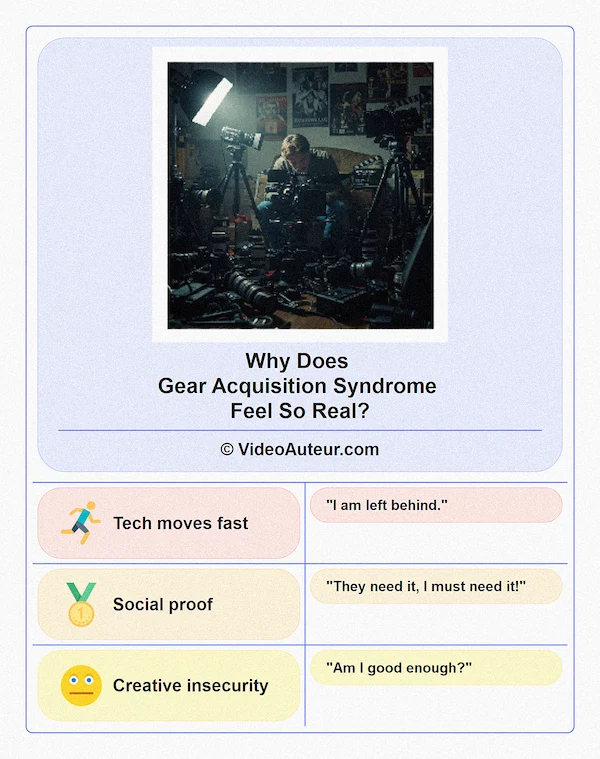 What is gear acquisition syndrome and why does it feel so real?
- Tech moves fast: Camera companies are releasing “must-have” upgrades every year—8K! AI autofocus!—making older gear feel obsolete overnight.
- Social proof: When influencers and peers showcase shiny new tools, it’s easy to think, “If they need it, I must need it too.”
- Creative insecurity: Deep down, GAS often masks fears like, “Am I good enough?” Buying gear feels safer than admitting, “I need to practice storytelling and composition.”
But here’s the good news: Acknowledging GAS is the first step to beating it. You’re not alone, and you’re not broken for feeling this way. Even pros battle gear obsession—they’ve just learned to focus on craft over consumerism.
So, if you’ve ever felt guilty about gear cravings, take a deep breath. It’s not just you. And more importantly, you’re only partly to blame.
What is the Psychology of Gear Acquisition Syndrome?
Gear Acquisition Syndrome often stems from creative insecurity and perfectionism.
For beginners, buying new equipment feels like a shortcut to professional results, masking the vulnerability of learning.
It's fueled by dopamine hits from unboxing and social comparison, tricking you into believing the next purchase will finally unlock your potential.
Let’s unpack this gently: GAS isn’t just about gear—it’s about feelings. That urge to buy another lens or upgrade your camera often masks deeper insecurities many creatives face. Here’s what’s really going on inside:
Why Do We Fall into the Gear Acquisition Syndrome (GAS) Trap?
Beginners fall into GAS because perfectionism disguises procrastination as preparedness.
Fear convinces us gear upgrades will skip the vulnerable learning curve, while social media feeds comparison and dopamine rewards the excitement of buying over the hard work of creating.
Remember: that new lens won't shoot for you.
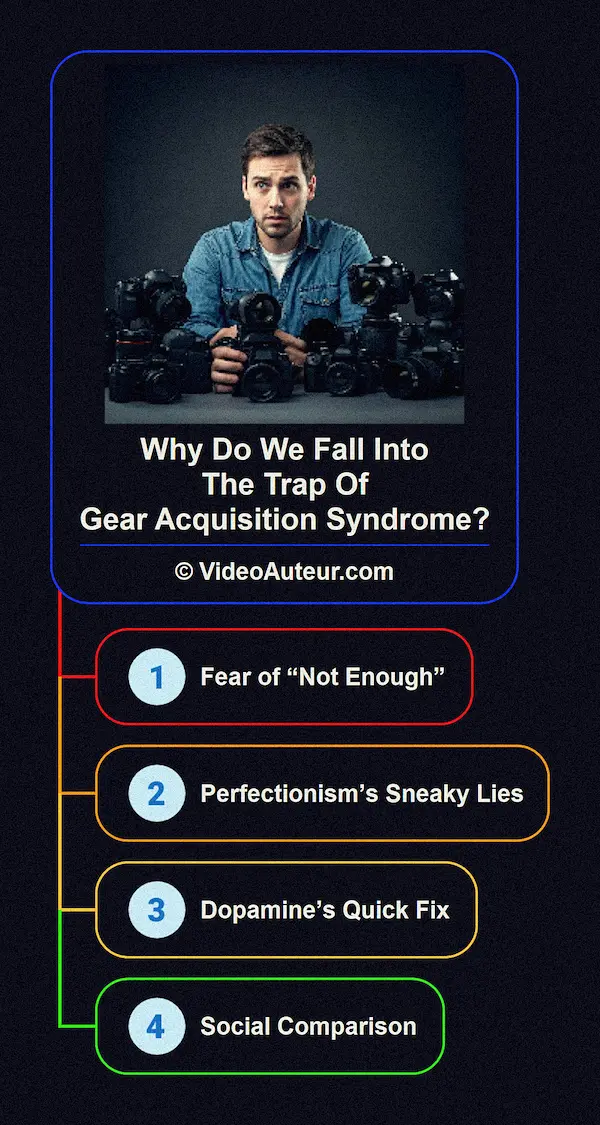 What is gear acquisition syndrome and why do we fall into its trap?
Fear of “Not Enough”
- “My videos look amateur because I don’t have that $4,000 camera.”
- Beginners—in fact, many shooters—often tie their self-worth to their tools, believing gear will bridge the gap between their current skills and the “professional” work they admire. Spoiler: It won’t!
Perfectionism’s Sneaky Lies
- “If I just get this cinema-grade light, my shots will finally be flawless.”
- Chasing “perfect” gear is really about avoiding the vulnerability of learning. Mastery takes time—and no gadget fast-tracks that journey.
Dopamine’s Quick Fix
- That rush of excitement when you unbox a new gimbal? It’s real—your brain releases dopamine, the “reward” chemical. But like a sugar high, it fades fast, leaving you craving the next purchase.
Dopamine and Anticipation
Research shows that dopamine is released in anticipation of a reward, not just when the reward is received. This means that the excitement you feel when unboxing a new gimbal is partly due to the anticipation of the reward. The unpredictability of the reward can increase the amount of dopamine released, making the experience even more thrilling.
Social Comparison
- Scrolling through Instagram reels of influencers with expensive mirrorless cameras and lens collections? It’s easy to feel like you’re “behind.” But remember: They’re showing highlights, not their own early struggles with a basic DSLR.
How Gear Acquisition Syndrome (GAS) Hurts More Than Your Wallet
GAS traps beginners in endless research and upgrading, delaying actual shooting.
It fuels anxiety over missing new gear and drains the creative joy essential for learning.
Your skills grow through practice with any camera, not by acquiring a perfect lens.
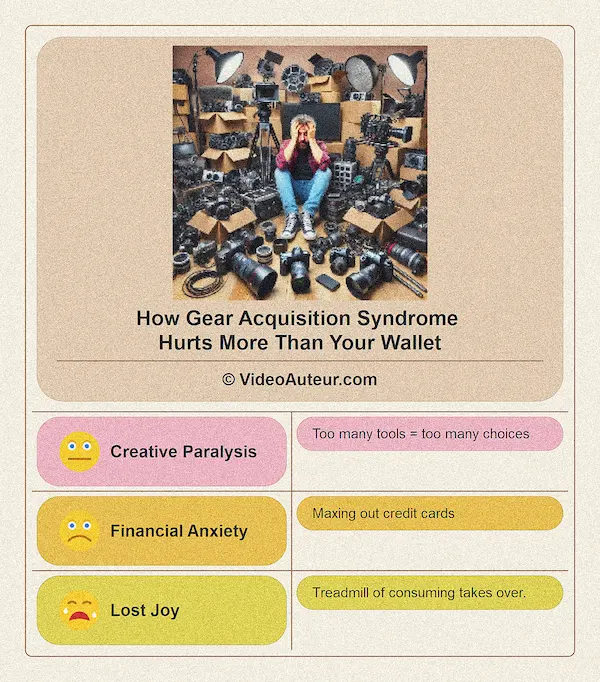 What is gear acquisition syndrome and how it hurts more than your wallet.
- Creative Paralysis: Too many tools = too many choices. You’ll spend hours researching gear instead of filming, thinking, “I can’t start my project until I have the right mic.”
- Financial Anxiety: Maxing out credit cards for gear you rarely use breeds guilt and stress—emotions that stifle creativity.
- Lost Joy: The thrill of creating gets replaced by the treadmill of consuming.
How to break the cycle of Gear Acquisition Syndrome (GAS)
Break the cycle by asking, “Does this solve a specific problem I actually have right now?”
Use the gear you own until it fails you, not before.
Embrace limitations -- they sharpen storytelling skills faster than any new lens.
Focus on completing projects and celebrating finished work, not accumulating unused accessories.
Here’s the secret: Your voice matters more than your gear. Start small:
- Ask: “Does this solve a problem I’m actually facing?” (e.g., buying a lav mic after realizing your built-in audio isn’t cutting it for interviews).
- Embrace limitations: Some of the most iconic YouTube videos were shot on iPhones. Constraints fuel creativity—they force you to focus on story over stuff.
- Celebrate progress, not purchases: Finished a short film with your kit lens? That’s a bigger win than owning five lenses you’ve never tested.
GAS preys on your passion, but awareness is your superpower. You’re not “broken”—you’re just human in a world that profits from your insecurities. (I know it hurts, but at least, you're now aware.)
So, breathe, refocus on what truly makes your work unique (hint: it’s you), and let go of the myth that gear defines your worth.
What Causes Gear Acquisition Syndrome?
Gear Acquisition Syndrome stems from marketing hype, social media comparison, and the dopamine rush of unboxing -- not actual creative need.
Beginners often mistake a new lens for a shortcut to better video, but this pressure rarely improves storytelling.
Recognize the trap: focus on skill, not shopping carts.
Let’s break this down gently: GAS isn’t just about “weak self-control.” It’s a perfect storm of external pressures and internal vulnerabilities—and understanding them can help you break free.
- The Marketing Machine
- Social Media’s Highlight Reel
- Community Peer Pressure
- The Dopamine Trap
- Fear of Being “Less Than”
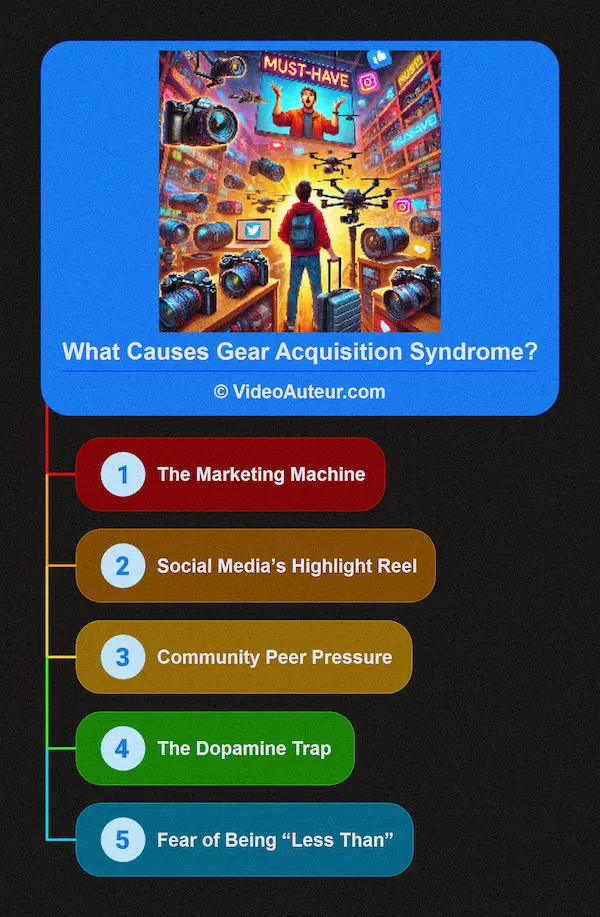 What is gear acquisition syndrome and what causes it.
1. The Marketing Machine
Camera companies and tech brands are really good at their jobs. They’ll convince you that:
- Last year’s 4K camera is suddenly “outdated” because this year’s model has “AI-powered autofocus.”
- You need a $1,500 anamorphic lens to shoot “cinematic” videos (spoiler: you don’t).
These tactics prey on FOMO (Fear of Missing Out). Limited-time discounts, flashy ads, and influencer partnerships make you feel like you’re losing opportunities if you don’t upgrade now. (I know because that's the effect that "the marketing machine" also has on me!)
2. Social Media’s Highlight Reel
Scrolling through Instagram or YouTube? Even Facebook? You’ll see:
- Influencers unboxing the “latest essential tool for pros.”
- Cinematic B-roll shot on $10,000 rigs with captions like, “This camera CHANGED MY WORK!”
What you don’t see:
- The years they spent mastering lighting and storytelling with basic gear.
- The sponsorships pushing them to promote products.
It’s easy to compare your Chapter 1 to someone else’s Chapter 10—and feel like you’re failing. Do you honestly think it's a fair comparison? I don't!
This is why I rarely use social media just for personal reasons and I'm very careful if I'm using it. It forces you and your loved ones to make the unnecessary comparisons with other people's stuff. Instead of focusing on one's personal, honest, and organic growth.
3. Community Peer Pressure
Ever been in a filmmaking forum where someone asks, “What’s the best camera for beginners?” and gets 50 replies like, “Just save up for a Sony FX3!”?
- Well-meaning peers (or strangers) equate “serious videographer” with “owning pro gear.”
- You start doubting your trusty DSLR, or your entry-level—but pro-grade—APS-C mirrorless camera, thinking, “Maybe I can’t call myself a filmmaker until I upgrade.”
4. The Dopamine Trap
Buying gear feels good—for a moment. (I guess we've all been there. ;-) ) That rush of unboxing a new gimbal or lens? It’s a dopamine hit, your brain’s “reward” chemical.
But like a movie trailer, the excitement fades fast. Soon, you’re chasing the next purchase to recreate that high.
5. Fear of Being “Less Than”
Deep down, GAS often masks questions like:
- “Am I a ‘real’ videographer if I don’t own a cinema camera?”
- “Will clients take me seriously with my starter kit?”
It’s easier to blame gear than face the scary (but rewarding) work of practicing your craft.
The Good News? Awareness is Power
You’re not falling for these traps because you’re gullible—you’re human. The first step to overcoming GAS is recognizing these forces at play—especially the external ones.
Next time you feel the itch to buy, pause and ask:
- “Is this solving a problem I actually have?”
- “Am I buying this to impress others… or to create better work?” (I invite you to choose the latter. Many are already doing the former, like impressing others with material possessions, instead of being a person with desirable personality and life-and-work ethic.)
Remember: Great storytelling starts in your heart and hands, not your shopping cart.
Filmmaking Gear Obsession: Why It Happens
Gear obsession happens because beginners mistake tools for talent.
It's easier to believe a new lens is the missing "cinematic" secret than to face the slow, unglamorous work of mastering light and story.
Chasing specs feels like progress; scrolling feeds of shiny gear fuels comparisonitis while the real upgrade -- practice -- stays on the shelf.
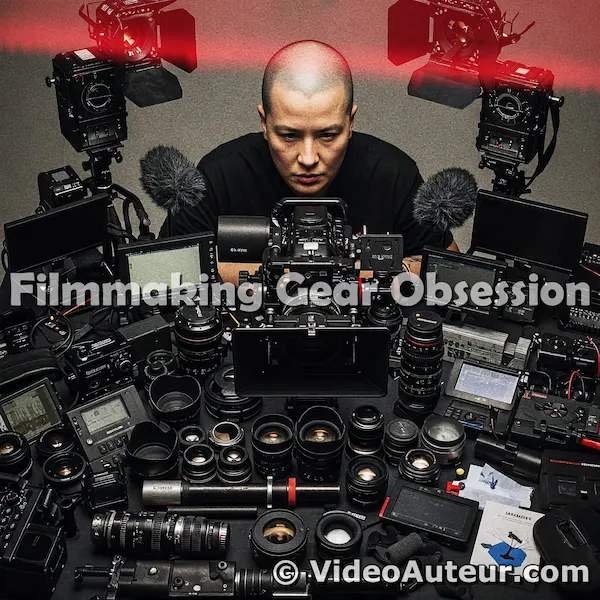 What is Gear Acquisition Syndrome in filmmaking
Let’s unpack this kindly: Gear obsession isn’t about greed—it’s about hope. That camera or lens isn’t just metal and glass—okay, fine, mostly plastic. But to you, it’s a magic key that might unlock the “professional” look you crave.
But why does this happen so often in videography?
The Allure of Technical Specs
- The 4K+ Trap: We’re bombarded with "Real filmmakers shoot in 4K!"—but here’s the reality: If your audience watches on phones (and most do), 1080p is more than enough. Chasing 4K “just because” is like buying a racecar to drive in school zones—it looks impressive, but it rarely serves your actual needs. An overkill.
- Lens Hype: Ads and reviews rave about “buttery bokeh” and “low-light superpowers,” making it seem like a $1,200 prime lens will transform your work. But ask yourself: How often do I shoot in pitch-dark environments? Will creamy bokeh matter if my story feels flat? Do I really have to always blur the background to oblivion? (The truth is, many do!)
The Deeper Reason: Chasing a Mirage
Gear obsession thrives on a seductive myth: “If I own what the pros use, I’ll create what the pros make.”
- You watch behind-the-scenes videos of Netflix shoots with RED cameras and think, “I need that to be taken seriously.”
- You see YouTube tutorials shot on $3,000 mirrorless cameras and assume their success hinges on the gear.
But here’s what no one shows you:
- Many iconic scenes were filmed on not so professional cameras. (Paranormal Activity grossed $194 million and was shot on a $15,000 budget—with basic gear.) The real lesson? Use tools that fit the task.
- Even pros rarely own everything; they rent gear tailored to each project’s needs.
Why Videography Feels So Gear-Centric
- The Myth of “Cinematic”: Social media equates “cinematic” with specific gear—shallow depth of field, 24fps, and moody color grades. But I think true cinematic (or movie-like) quality also comes from lighting, composition, and—above all—emotion—not just from a lens.
- Let’s name the beast: "Comparisonitis." You scroll through feeds of shiny new gear, convinced everyone’s ‘leveling up’ while you’re stagnant.
- The Quick Fix Fallacy: Buying gear feels like progress. Practicing storyboarding? Not so much. It’s easier to click “Order” than to confront the slow, rewarding grind of mastery.
Breaking the Cycle
Let’s reframe this critical point: Your best work comes from vision, not gear.
Next time you’re tempted by a new gadget, ask:
- “Does this solve a problem I’ve actually encountered?” (Example: Buying a shotgun mic after realizing your built-in mic picks up too much background noise.)
- “Can I achieve a similar result with what I already own?” (e.g., DIY lighting hacks vs. expensive LED panels.)
Remember: Your best work will come from your vision, not your credit card statement. A skilled videographer can make magic with a smartphone, or an entry-level camera. An unskilled one will still make mediocre videos with a $10,000 setup.
Can a photographer be a videographer: Photographers Turning to Videography, A Double-Edged Sword
Yes, photographers can absolutely become videographers -- but the double-edged sword is that your existing eye for composition doesn't automatically translate to skills like audio capture or motion pacing.
Success hinges on learning the new language of sequence and sound rather than treating video as an expensive gear upgrade to your stills kit.
If you’re a photographer exploring videography, first off: Welcome! The world of moving images opens thrilling new ways to tell stories.
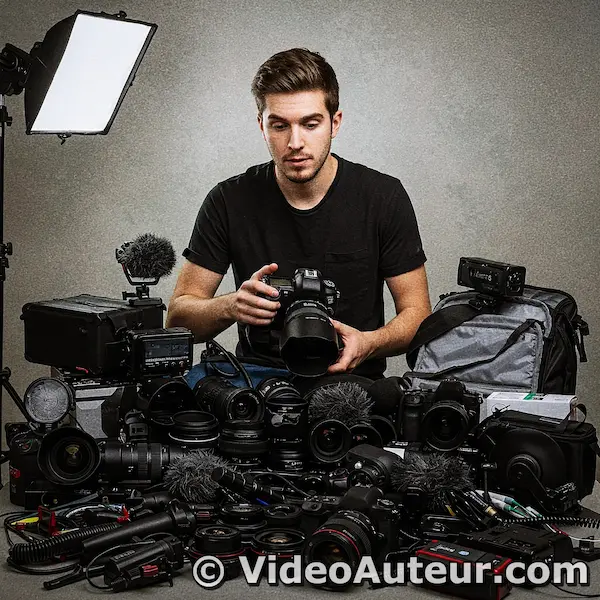 What is Gear Acquisition Syndrome in photography
But here’s the catch: Transitioning from stills to video can quietly fuel Gear Acquisition Syndrome (GAS) in ways you might not expect. Let’s unpack this gently.
Why the Switch Feels Tempting (and Overwhelming)
Modern mirrorless cameras make videography seem accessible, right? With features like:
- Autofocus for video: No more manual focusing struggles mid-shot.
- In-body stabilization: “I can finally shoot handheld without a gimbal!”
- 4K/60fps: “My footage will look cinematic straight out of camera!”
It’s easy to think, “I already own a great camera—how hard can video be?”
But videography isn’t just “photos that move.” It’s a new language of pacing, sound, and motion—and suddenly, your trusted photography gear feels incomplete.
How Gear Acquisition Syndrome (GAS) Sneaks In
The Accessory Avalanche
- You’re no longer just buying lenses. Now it’s gimbals, shotgun mics, wireless portable mics, LED panels, field monitors…
- “I need this $800 gimbal to make my shots look smooth!” (Meanwhile, seasoned videographers are crafting magic with handheld rigs and practiced technique.)
The Myth of “Easy Upgrades”
- Mirrorless cameras promise seamless video transitions, but autofocus won’t save a poorly-framed scene, and 4K won’t fix shaky storytelling.
- Many photographers-turned-videographers fall into the trap: “If I buy X, my videos will look pro.”
Financial Pressure & Identity Shifts
- With photography becoming oversaturated, adding “videographer” to your title feels like a survival move. But doubling your services often means doubling your gear budget—fast.
- You might post that sleek mirrorless camera on a gimbal, thinking, “This proves I’m a real videographer now.” But deep down, gear becomes a crutch for imposter syndrome.
The Hidden Cost: Skill vs. Stuff
Here’s the irony: Many photographers diving into video focus so much on gear that they overlook the craft.
-
Stabilizers are not the same as Stability: A gimbal smooths shots, but it can’t teach you how to choreograph movement that serves the story.
- Auto-focus is not the same as Focused Vision: Relying on tech to “fix” your work risks making your videos feel generic—polished but soulless.
Remember: The videographers you admire built their skills first. They learned to:
- Manual focus with intention.
- Stabilize shots through body mechanics, not just gadgets.
- Use natural light creatively before investing in expensive kits.
Navigating the Transition Mindfully
Borrow, Rent, or Repurpose
- Test a gimbal before buying. Can you achieve similar results with a $20 shoulder rig?
- Use your photography reflectors as bounce boards for video lighting.
Learn Incrementally
- Master audio basics with a $50 lav mic before dropping $500 on a wireless system.
- Practice framing movement with your existing tripod before splurging on a slider.
Ask Yourself:
- “Am I buying this to fill a skill gap… or a confidence gap?”
- “Would this money be better spent on a storytelling workshop?”
Transitioning to videography is exciting—but don’t let gear become your security blanket. Your photography eye for composition and light is already a superpower. Build on that, and let tools serve your vision, not define it.
How should I view and respond to these Gear Acquisition Syndrome memes?
View these memes as a shared, humorous reality check -- a sign you're in good company.
Laugh, then let the joke be a prompt: instead of browsing gear reviews, grab what you already own and go shoot something.
The best response to GAS is always making a video.
Let’s be honest: We’ve all seen that meme. Like a photo of a grinning influencer holding a giant camera lens, captioned: “Me buying my 7th 50mm prime because this one is 0.2% sharper.” Or the viral tweet: “My bank account: $3. My camera bag: $15,000 worth of gear I’ve never used.”
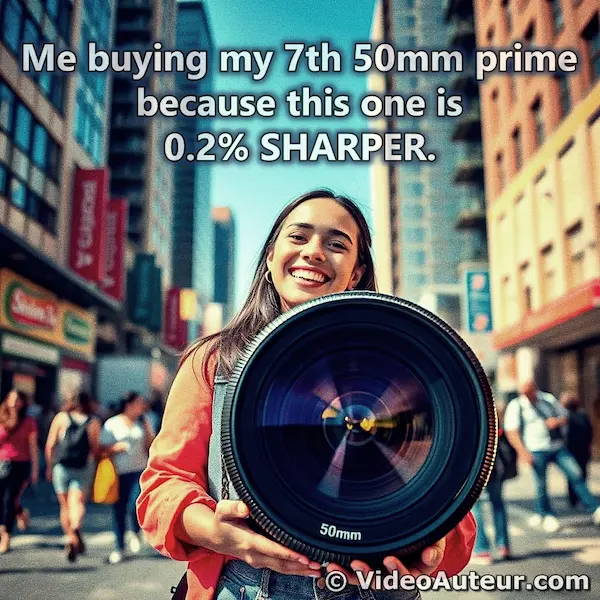 What is Gear Acquisition Syndrome: An addiction to buying multiple lenses
GAS memes are everywhere in videography communities—and for good reason. They’re like a secret handshake, a way to say, “Hey, I see you. I’m struggling with this too.”
Why Memes Matter
These jokes hit home because they’re painfully relatable:
- The “Unopened Gear Shrine” meme: A closet full of pristine boxes—gimbals, mics, lenses—still wrapped in plastic.
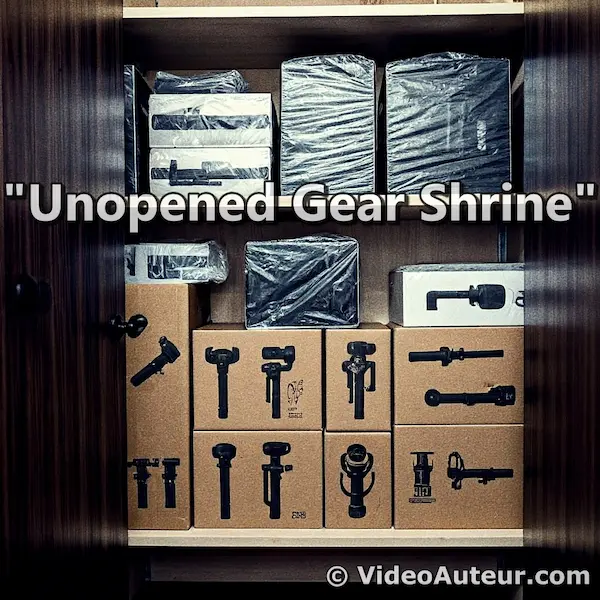 What is Gear Acquisition Syndrome: The “Unopened Gear Shrine” meme
--
- The “This Is Fine” dog meme: Sitting calmly in a room labeled “My Budget,” while flames labeled “New Camera Release” engulf everything.
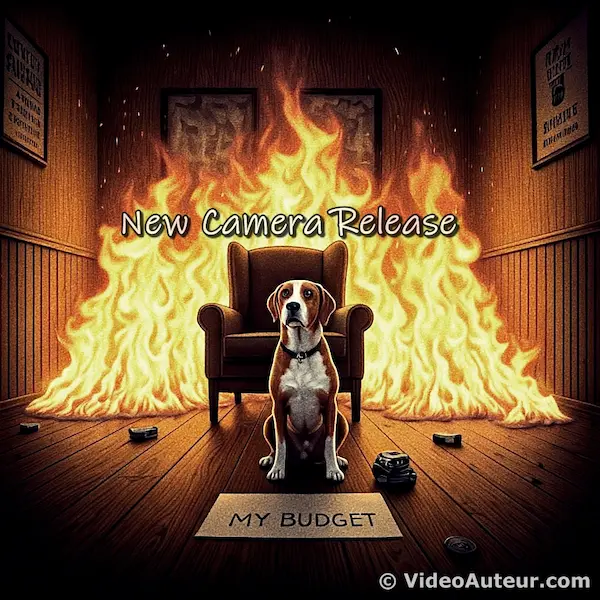 What is Gear Acquisition Syndrome: The “This Is Fine” dog meme
They’re funny because they’re true—but beneath the laughs, these memes do something important: They normalize the struggle. They remind us that GAS isn’t a personal failing—it’s a shared experience.
The Healing Power of Humor
Laughing at GAS memes helps in two ways:
- It breaks the shame cycle: Instead of feeling guilty about impulse buys, you think, “Okay, I’m not the only one who bought a drone for a single project.”
- It creates community: Memes turn isolation into solidarity. When you chuckle at a “Lens Hoarders Anonymous” post, you’re joining a club no one asked to be in—but everyone’s glad exists.
But Memes Aren’t a Solution
Here’s the gentle truth: While laughing at GAS is cathartic, it’s easy to hide behind the jokes. “Haha, I’m such a gear addict!” can become a way to avoid addressing the habit.
So, next time you share or laugh at a GAS meme, let it spark reflection, not become a crutch:
- “Am I using humor to avoid confronting my spending?”
- “Could I channel this energy into creating instead of consuming?”
Because the best meme you’ll ever make? It’s the one where you film something awesome with the gear you already own.
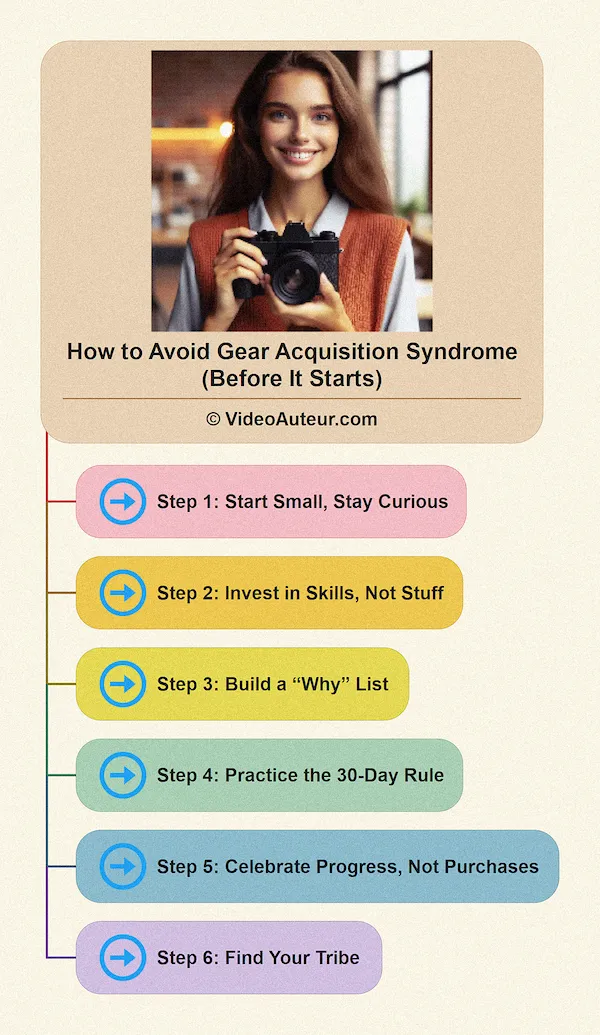
How to Avoid Gear Acquisition Syndrome (Before It Starts)
Focus on what you can create with the gear you already own -- even if it’s just a smartphone.
Master composition and lighting before upgrading anything.
Ask yourself if a new purchase solves a specific problem or simply feeds a shiny distraction.
If it’s the latter, wait 30 days.
Let’s start with a liberating truth: GAS isn’t inevitable. You can nurture your creativity without falling into the gear obsession trap—and it begins with shifting your mindset from “What do I need to buy?” to “What can I create with what I have?”
 What is gear acquisition syndrome and how to avoid it?
Step 1: Start Small, Stay Curious
Your first camera setup doesn’t need to be fancy. In fact, limitations can be your greatest teacher.
- Begin with the basics: A smartphone or entry-level camera, one versatile lens (like an 18-55mm kit lens), and a tripod.
- Ask yourself: “What stories can I tell with this?” instead of “What gear am I missing?”
Think of it like learning to paint: Picasso could create magic with a single brush. You don’t need every color or tool to start.
Step 2: Invest in Skills, Not Stuff
Have you noticed creators with high-end full-frame mirrorless cameras producing flat, uninspired work, while others wielding older, modest gear fascinate audiences with raw, heartfelt storytelling? The difference? Skill trumps gear, every time.
Free (or affordable) resources:
- YouTube tutorials on lighting setups using household lamps.
- Free editing software like DaVinci Resolve to master pacing and color grading.
- Local workshops focusing on storytelling fundamentals.
Step 3: Build a “Why” List
Before buying anything, write down:
- The problem you’re solving: “I need a lav mic because my current audio is muffled in interviews.”
- The shiny distraction: “I want this anamorphic lens because it looks cool on TikTok.”
If your reason leans toward #2, pause.
Step 4: Practice the 30-Day Rule
Feel the urge to buy a new gadget? Wait 30 days. If you still “need” it after:
- Researching workarounds (e.g., using natural light instead of buying a $500 LED panel).
- Practicing with your current gear (e.g., nailing manual focus before upgrading to autofocus).
Most cravings fade. If they don’t, you’ll buy with clarity, not impulse.
Step 5: Celebrate Progress, Not Purchases
Track milestones that aren’t tied to gear:
- “I filmed my first 1-minute story without cutting corners.”
- “I finally nailed exposure in tricky backlight!”
- “A client praised my pacing in their wedding video.”
These wins build creative confidence—the antidote to GAS.
Step 6: Find Your Tribe
Join communities that celebrate craft, not consumerism. Seek feedback on your work, not your gear.
When someone brags about their new $3,000 gimbal, cheer them on—but remember: Your value isn’t in your bag of gadgets. It’s in your unique perspective.
A Final Note for Beginners
GAS preys on insecurity. But here’s the secret: No one starts as a pro. The videographers you admire began exactly where you are—with basic tools and big dreams.
Your phone or starter camera is a blank canvas. Your creativity is the brush. Start painting.
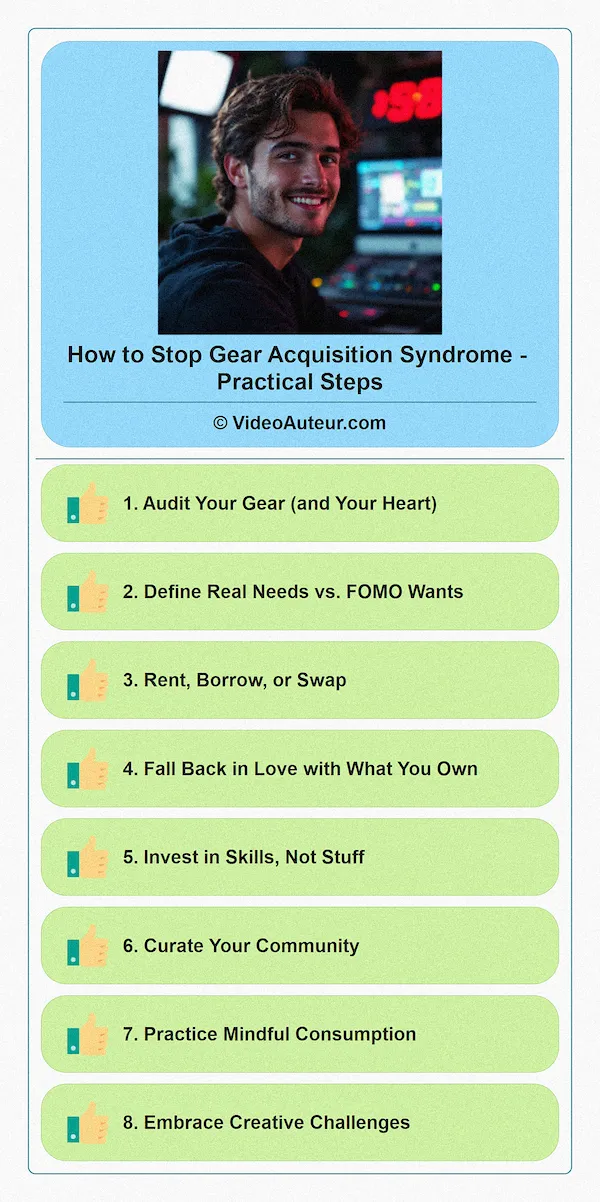
How to Stop Gear Acquisition Syndrome: Practical Steps
Start by auditing what you already own -- if it’s gathering dust, sell it to fund skill-building instead.
Before any new purchase, enforce a 30-day cooling-off period.
Rent specialty items for single projects.
Remember, mastering lighting and composition with your current camera builds a better reel than an unopened lens box ever will.
If you’re reading this, you’ve already taken the hardest step: acknowledging GAS. That’s huge!
Now, let’s gently untangle the cycle with actionable, judgment-free strategies.
 What is gear acquisition syndrome and how to overcome it?
1. Audit Your Gear (and Your Heart)
Start by laying out everything you own—cameras, lenses, mics, even that gimbal still in its box. Ask:
- “Have I used this in the past six months?”
- “Does it solve a problem I’m actively facing?”
Sell or donate what’s gathering dust. Not only will this declutter your space, it’ll remind you: Your value isn’t tied to your gear stash.
2. Define Real Needs vs. FOMO Wants
Before buying anything, ask:
- “Does this fix a specific issue?” (e.g., “I need a tripod because handheld shots are too shaky.”)
- “Am I buying this because I saw it on YouTube?”
If it’s the latter, pause. FOMO fades—skills don’t.
3. Rent, Borrow, or Swap
That $1,200 drone you’re eyeing for a single project? Rent it. Borrow a friend’s prime lens. Join gear-sharing groups. You’ll save money and realize most gadgets aren’t “essential” long-term.
4. Fall Back in Love with What You Own
Revisit reviews of your current gear. Remember why you bought it! That “outdated” DSLR? It can still:
- Teach you manual focus (a skill autofocus can’t replace).
- Force you to master natural light instead of relying on expensive LEDs.
Pro tip: Participate in a “30-Day Gear Appreciation Challenge”—use only your oldest equipment for a month. You’ll rediscover its magic.
5. Invest in Skills, Not Stuff
Channel your energy into:
- Free tutorials on framing, pacing, or color grading.
- A $50 lighting course instead of a $500 softbox.
- Experimenting with DIY solutions (e.g., using bedsheets as diffusers).
Great storytelling thrives on ingenuity, not inventory.
6. Curate Your Community
Join groups that celebrate creativity over consumerism. Avoid forums where “What gear should I buy?” drowns out “How did you nail that shot?” Seek mentors who preach:
- “Master manual settings before chasing autofocus.”
- “Constraints breed innovation.”
7. Practice Mindful Consumption
- Unfollow trigger accounts: Mute influencers who post more gear than genuine work.
- Set a “Cooling-Off” period: Wait 30 days before any purchase. If the urge fades, redirect that money to a skill-building fund.
8. Embrace Creative Challenges
Join projects like:
- “One Lens, One Week”: Shoot an entire short film with a single focal length. (On an APS-C camera, I prefer the 33mm or 35mm prime lens—the equivalent of 50mm in full frame. But for events, I love the 23mm prime lens—the equivalent of 35mm full frame)
- “No-Edit November”: Focus on getting shots right in-camera.
You’ll learn to create solutions instead of buying them.
A Final Note: You’re More Than Your Gear
GAS thrives on insecurity, but here’s the truth: Your voice is your greatest tool. The world doesn’t need another videographer with a $10,000 rig—it needs your stories, told through your unique lens.
So, take a deep breath. Open your camera. And start filming with what you’ve got. The rest will follow.
FAQs: Gear Acquisition Syndrome (GAS) for Beginner Videographers
What is Gear Acquisition Syndrome (GAS)?
What is Gear Acquisition Syndrome (GAS)?
Gear Acquisition Syndrome, or GAS, is the overwhelming urge to keep buying new equipment—cameras, lenses, microphones, or accessories—even when you already have what you need to create videos.
It’s when your excitement to create gets overshadowed by the constant belief that the next piece of gear will finally unlock your creative potential.
What does "GAS" mean in photography and videography?
What does "GAS" mean in photography and videography?
In photography and videography, GAS specifically describes that feeling where you think your photos or videos will only improve if you buy the newest, trendiest gear—like the latest camera body, lens, or stabilizer.
It’s common among beginners, and shows up as a cycle of researching, purchasing, and then feeling dissatisfied with your tools, hoping the next one will finally be “the one”.
What causes Gear Acquisition Syndrome?
What causes Gear Acquisition Syndrome?
GAS is triggered by a mix of internal and external factors:
- Comparison: Seeing others with newer, better, or fancier gear on YouTube or forums can make your own setup feel lacking.
- Marketing: Camera companies and influencers constantly promote new products as “must-haves.”
- Insecurity: You might feel that your skills or finished videos aren’t good enough and blame your equipment.
- Dopamine rush: The excitement of researching and buying new gear gives a short-lived sense of reward (similar to retail therapy).
How to deal with gear acquisition syndrome?
How to deal with gear acquisition syndrome?
Here are some practical ways to manage GAS so you can focus on what really matters—creating videos:
- Pause and reflect: Before buying anything, ask yourself if this new piece of gear will genuinely solve a problem or is just a “nice to have.”
- Set goals: Focus on creative challenges—like making a short film or experimenting with lighting—using your current gear.
- Limit exposure: Unfollow social media accounts and unsubscribe from gear review channels that constantly tempt you.
- One-in, one-out rule: Consider selling or donating gear you no longer use before buying something new.
- Remember the basics: Skills and storytelling are more important than having the latest equipment. Some of the best videos have been shot on entry-level cameras or even smartphones.
Conclusion: What is gear acquisition syndrome?
Gear Acquisition Syndrome (GAS) is a common challenge in videography—especially for beginners navigating the exciting but overwhelming world of video production. It’s easy to fall into the trap of believing that the next camera, lens, or gadget will unlock your creative potential.
But here’s the truth: Your best work comes from your vision, not your gear bag.
By understanding the psychology behind GAS—whether it’s the fear of inadequacy, the dopamine rush of new purchases, or the pressure to “keep up”—you’ve already taken the first step toward breaking free.
Recognizing the external triggers, like aggressive marketing and social media comparisons, helps you see GAS for what it is: a distraction, not a solution.
The key to overcoming GAS lies in shifting your focus:
- From gear to growth: Invest in skills, not specs. Master your current equipment before chasing upgrades.
- From consumption to creation: Let your stories—not your shopping cart—define your journey.
- From comparison to community: Surround yourself with creators who celebrate ingenuity over inventory.
So, the next time you feel the itch to buy that shiny new gadget, pause and ask: “Will this truly help me tell better stories, or am I just chasing a temporary thrill?”
Your value as a creator comes from your vision. Now that you’re ready to stop chasing specs and start capturing stories, here is your complete
Remember, some of the most impactful videos were shot on modest setups. Your audience connects with your story, not your equipment list.
And the best gear? It’s the one that helps you share your unique perspective with the world.
Ready to Take the Next Step?
Start today:
- Pick up your camera (or phone!) and film something.
- Experiment with lighting, framing, and pacing using what you already own.
- Share your work with a community that values creativity over consumerism.
Feeling inspired to put your gear to work? Return to the full
guide and continue building your skills, one story at a time.
Your creative journey is about so much more than gear. It’s about the stories you tell, the connections you make, and the joy of bringing your ideas to life.
So, what story will you tell with what you already have?
You might like these
How Does a Gimbal Work? Complete Guide for Video
How Does a Gimbal Work? Learn 3-axis stabilization, setup, balancing, and techniques for smooth video. Complete guide for video creators and beginners.
How Does a Steadicam Work? Smooth Shots Explained
How Does a Steadicam Work? Learn the physics of gimbal balancing, operator technique, and smooth camera movements for professional video storytelling.
About Alvin Motilla, Owner and Author of Video Auteur Website
Alvin Motilla started Video Auteur to help everyday people make video presentations that communicate and connect with human audience.

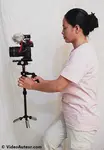


Alvin Motilla is the creator of VideoAuteur.com, where he helps everyday people make videos that truly connect with audiences. With over 20 years of experience spanning scriptwriting, documentaries, corporate, and freelance video production, he champions the human side of creation over gear obsession. A graduate of AB Mass Communication, he believes that showing up with heart matters more than owning expensive equipment. Off-screen, Alvin enjoys biking with his wife and daughter, staying active, and studying Scripture.

Get Your Free Cheat Sheet
The Most Common Video Mistakes (and How to Fix Them)

Sign up to download it instantly. You’ll also get tips, step-by-step guidance, and gear guides to make video creation simple.
What's New


-
What is B-roll and why does my video need it? A Guide
 Wondering what is B-roll and why does your video need it? This guide reveals simple tips to add visual variety, hide edits, and keep viewers watching longer.
 -
What is the Rule of Thirds in Digital Composition? Visual Guide
 What is the Rule of Thirds in digital composition? A visual guide to placing subjects on power points for better storytelling. Learn how to use the grid.
 -
What is Digital Video Production? A Beginner's Complete Guide
 What is digital video production? Learn the basics, tools, and step-by-step process to create videos—from concept to sharing. Perfect for beginners!



Get Your Free Cheat Sheet
The Most Common Video Mistakes (and How to Fix Them)

Sign up to download it instantly. You’ll also get tips, step-by-step guidance, and gear guides to make video creation simple.
Copyright © 2014- VideoAuteur.com All rights reserved
This website does not sell any personal information.
Get Your Free Cheat Sheet
The Most Common Video Mistakes (and How to Fix Them)
Sign up to download it instantly. You’ll also get tips, step-by-step guidance, and gear guides to make video creation simple.