- Video Production
- Pre-production
Pre-production: Your First Step to Engaging Your Audience
Pre-production is where you define exactly who you’re making the video for and how to satisfy them.
Before you ever press record, you develop your creative treatment, identify the moments that will matter to that specific viewer, and prepare your gear and settings.
This early planning gives your shoot a clear direction, so the final result truly connects.
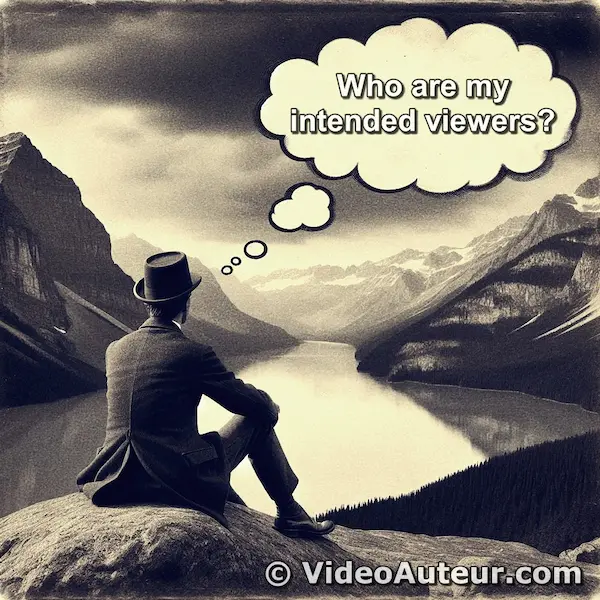 Who are supposed to watch the video?
Key Takeaways - Video Pre-production
- Audience Engagement Begins Before You Press Record: Skipping the "tedious" pre-production stage to jump straight into shooting is a direct path to losing viewer interest. The goal of this early work is viewer satisfaction.
- Pre-Production is Mandatory for All Video (Not Just Fiction): The need for preparation applies equally to capturing real-life events and "non-fiction" moments. If there is a viewer, there is a need for a plan to give them a meaningful experience.
- "Going with the Flow" Requires a Compass: You can be open to spontaneity while filming, but you must combine that with a clear sense of direction. Pre-production provides the structure that helps you know what to capture when life unfolds unpredictably.
- Define the Specific Viewer You Are Trying to Please: Accept that you are not making a video for "everyone." Pre-production helps you identify your intended viewer so you can tailor the content, moments, and editing to their specific concerns.
- Rendering Happens in the Mind Before the Computer: The "idea" of your video is not just the subject you film, but how you treat that subject. Pre-production is where you develop this creative treatment to ensure it suits your audience.
- Prepare the Output Before the Input: Use this stage to define the final format (DVD, web, HD file). Knowing this ahead of time allows for proper camera settings and gear preparation, freeing you up to focus purely on capturing great content during the shoot.
We want to see that our audience love our videos, right? For us, their positive feedback means we’ve done a great job!
But, we’re going against their best interest (and our sense of fulfillment), when we...
- skip the “seemingly tedious” task of pre-production, and
- head straight to the “more exciting” world of video shoot.
Why is that? Because...
The goal of this early stage is viewer satisfaction.
Without that kind of preparation, we will hardly engage our audience. Worse, we may fail to connect with them.
The solution, then, is not to avoid the perfectly normal discomfort, that goes with this initial thinking and preparation.
Instead,
when you appreciate its value to you and your
audience, you’ll be able to tolerate the “minor ache”, of going through
this stage.
And it’s more than worth the effort, when you hear comments like, “I like your video!” :-)
Now, let’s try to answer some of your questions...
Is pre-production for video shoot of a real event needed?
Yes. Even real, unscripted events need pre-production.
It helps you plan shots, check audio, scout locations, secure permissions, and know your audience.
You can’t control everything, but preparation ensures you capture key moments and edit a clearer, more enjoyable video.
I have two answers for that... a quick answer...and a detailed answer.
- The quick answer?... Yes!
- The detailed answer?... The question is saying like, “Does video creation need to start right?”
Well, of course! :-)
We think this initial work is only for movies, serious documentaries, music videos, or short films. Not true.
Think about it... Why do people involved in making those films, do this kind of preparation?
Because there are people who will watch those films.... and they want to give those people, a great viewing experience.
The same is true for events and real life, that you capture and present on video...
Non-fiction videos also have their audience. And satisfying them means,
starting your video right through pre-production.
I know it’s obvious, but sometimes we overlook it. ;-)
I just “go with the flow”, when shooting videos of real life.
Is that enough?
Not quite.
Going with the flow captures authentic moments, but beginners also need brief preparation: know your target viewer, the story’s direction, and what will make sense.
Combine spontaneous discovery with a simple plan.
That way your real-life video feels both natural and meaningful.
Nope!
Because you still need to do some initial thought and preparation if... you want to increase your chances of engaging your audience.
Let me share my experience...
When I go out and shoot, I also go with the flow of what’s happening. I love the idea of being open, and receptive to life. :-)
However, I find it more fulfilling, if I also have basic ideas about...
- where that "flow” is going, and
- what’s going to “make sense”, to my target viewer.
And how do I know that? By doing some initial thought and preparation.
So, I combine..
- the joy of discovery, when going with the flow during a shoot, and
- the sense of direction and order, after doing some early thinking.
This approach helps me in developing a video, that the audience finds satisfying and meaningful.
Conclusion: How can pre-production help me make a video that my audience finds satisfying and meaningful?
Pre-production helps you identify your target viewer, develop a content idea that addresses their concerns, and prepare the right gear and settings.
This early planning keeps your video focused, relevant, and organized, so your audience finds it satisfying and meaningful.
It helps you...
- Identify and understand your intended viewer.
- Develop your idea, for the content of your presentation.
- Prepare what you will need, for your video shoot.
1. Helps you identify and understand your intended viewer.
This early thinking allows you to get to know, who will really watch your video--the very person you want to satisfy.
It’s very important, because...
We’re not trying to make a presentation for everyone.
We’re not trying to please everybody.
So, if you do your initial thinking and preparing...
- You’ll feel the concerns of your target audience.
- You’ll know possible materials and moments to shoot, that are relevant to those concerns.
- You’ll sense how to organize, and edit your shots, in ways that your target will find pleasing.
2. Helps you develop your idea for video content.
I want to be clear about this. The “idea” for the content, of your non-fiction video, is not...
- the actual events that you record,
- the intimate life moments that you capture,
- the people that you film, or
- the sceneries and things that you shoot.
Idea is... how you see and render these subjects, for video.
You think “rendering” happens only in video editing? ;-)
Rendering happens also inside you... when you think about how you will treat your subject.
And initial thinking helps you develop this “idea”... one that suits your target viewer.
3. Helps you prepare what you will need for video shoot.
In this early stage, you also get ideas about...
- what gear you’ll need, and
- how you’ll use it in the field, to fulfill your idea for video.
Also, depending on the project, you can consider the output, even before the shoot. For example, will your client need a DVD? A high definition web video? A full-HD file copy? Or a combination of these?
This allows you, to make the needed camera settings earlier, so you can focus more on the content, when filming or shooting... content that your viewers would love to watch.
So, that’s what pre-production thinking can do for you, and your audience! :-)
The foundation of all this planning?
Stop the scriptwriting struggle!
You might like these
How Does a Gimbal Work? Complete Guide for Video
How Does a Gimbal Work? Learn 3-axis stabilization, setup, balancing, and techniques for smooth video. Complete guide for video creators and beginners.
How to Create a Video By Yourself: A Beginner's Guide
Discover how to create a video by yourself from start to finish. Overcome fear, use what you have, and share your unique story with confidence.
How Does a Drone Work: Complete Beginner's Guide
How Does a Drone Work explained simply. Discover drone history, components, controls, and why they're game-changers for filmmaking and photography.

Alvin Motilla is the creator of VideoAuteur.com, where he helps everyday people make videos that truly connect with audiences. With over 20 years of experience spanning scriptwriting, documentaries, corporate, and freelance video production, he champions the human side of creation over gear obsession. A graduate of AB Mass Communication, he believes that showing up with heart matters more than owning expensive equipment. Off-screen, Alvin enjoys biking with his wife and daughter, staying active, and studying Scripture.
Share on social media

Get Your Free Cheat Sheet
The Most Common Video Mistakes (and How to Fix Them)

Sign up to download it instantly. You’ll also get tips, step-by-step guidance, and gear guides to make video creation simple.
What's New


-
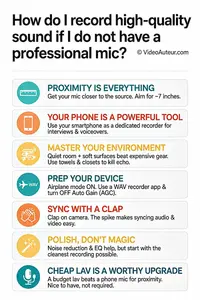
How do I record high-quality sound if I do not have a professional mic
 How do I record high-quality sound if I do not have a professional mic? Discover simple, zero-budget techniques using your phone for studio-quality audio.
 -
What is B-roll and why does my video need it? A Guide
 Wondering what is B-roll and why does your video need it? This guide reveals simple tips to add visual variety, hide edits, and keep viewers watching longer.
 -
What is the Rule of Thirds in Digital Composition? Visual Guide
 What is the Rule of Thirds in digital composition? A visual guide to placing subjects on power points for better storytelling. Learn how to use the grid.


Get Your Free Cheat Sheet
The Most Common Video Mistakes (and How to Fix Them)

Sign up to download it instantly. You’ll also get tips, step-by-step guidance, and gear guides to make video creation simple.
Copyright © 2014- VideoAuteur.com All rights reserved
This website does not sell any personal information.
Get Your Free Cheat Sheet
The Most Common Video Mistakes (and How to Fix Them)
Sign up to download it instantly. You’ll also get tips, step-by-step guidance, and gear guides to make video creation simple.