- Video Production
- Video Making Tips for Beginners
- What Is an Auteur
- What makes a person an auteur
What Makes a Person an Auteur? Mine Your Mind, Frame Your World
By Alvin Motilla and Jessica Motilla
An auteur isn't about expensive gear; it's about letting your unique memories and perspective guide every choice.
Instead of copying trends, mine your own life for details and frame shots through your personal lens.
When your specific worldview shapes the story, editing, and visuals, your video becomes distinctly yours.
Key Takeaways: What makes a person an auteur?
- The Source is Internal, Not External: You do not need expensive equipment or the latest trends to be an auteur. Your unique memories, experiences, and worldview are the raw materials for original creation.
- Mine Your Mind: Instead of looking outward for inspiration to copy, look inward to your own life details. Your specific history is a library of details no one else can access.
- Frame Your World: Let your personal perspective dictate every creative choice -- from the angle of the shot to the rhythm of the edit. When your worldview shapes the frame, the result is a visual signature no one else can replicate.
- Uniqueness is a Guarantee: Because there is no other version of you, originality is not something you must find; it is something you must allow to surface in your work.
- Shift from Imitation to Translation: The goal is not to make a video that looks like someone else's; it is to translate your internal attitude and choices onto the screen.
The transcript: What makes a person an auteur?
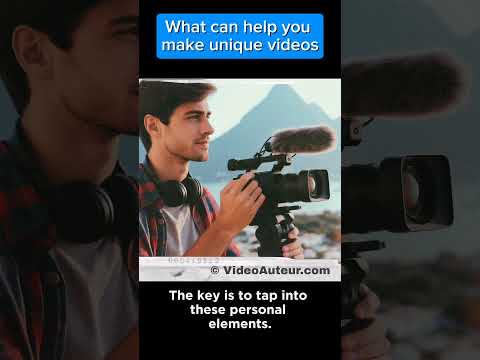
Ever wondered how to make your video truly unique?
Let's talk about becoming an auteur. Or someone with a unique voice, or perspective.
Do you know that anyone can be an auteur, including you?
Think about it: your experiences, memories, attitude, and choices - they're all uniquely yours. They make you one-of-a-kind.
And when you translate these into your videos, you create something original.
The key is to tap into these personal elements.
Use your unique perspective to shape your shots, your editing style, even the stories you choose to tell.
Remember, there's no one else in the world quite like you.
Your experiences and viewpoint can help you create videos that stand out.
So, start exploring your unique voice and let it shine through your videos.
Memory Aid: What Makes a Person an Auteur?
In a nutshell...
Your Voice... Your Vision... Can make you an auteur...
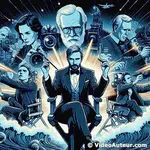
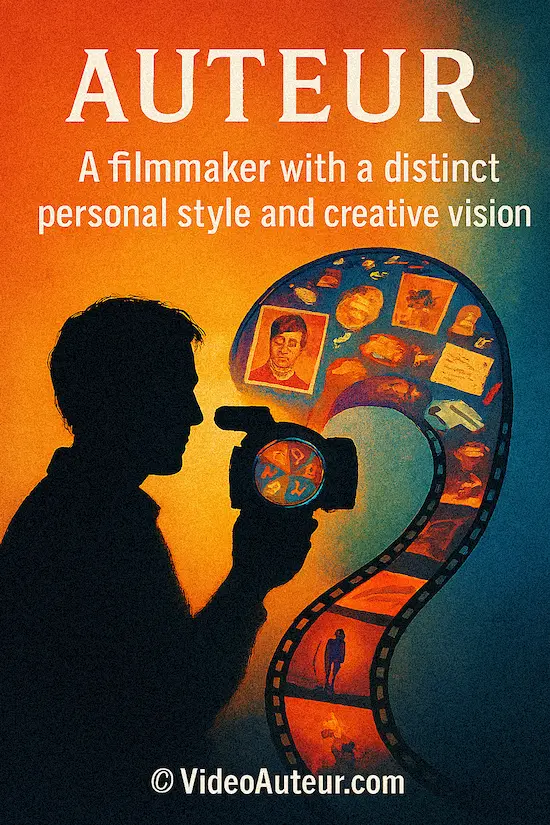 An auteur is a video creator whose unique personal perspective shapes every creative choice — from shots to editing to story.
Core Traits: Mnemonic #1 – U.A.O.U.P.
Core Traits: Mnemonic #1 – U.A.O.U.P.
| Letter | Meaning | Icon |
|---|---|---|
| U | Uniqueness is inherent | 🌱 |
| A | Anyone can be an auteur | 🙋 |
| O | Originality comes from within | 💡 |
| U | Uniqueness = Stand out | 🌟 |
| P | Power of perspective | 👁 |
Action Steps: Mnemonic #2 – T.T.S.L.
Action Steps: Mnemonic #2 – T.T.S.L.
| Step | What to Do | Icon |
|---|---|---|
| T | Tap into self | 🪞 |
| T | Translate into creation | 🎨 |
| S | Shape key elements | 🎥 |
| L | Let your voice shine | 🔊 |
Quick Recall Hook
💬 “Mine your mind — frame your world.”
(Mined experiences → Framed shots → Your world on screen)

FAQs: What makes a person an auteur?
What is an auteur?
What is an auteur?
An auteur is a filmmaker, usually a director, whose personal creative vision and distinctive style shine clearly in their films.
They have strong control over the filmmaking process, making the film reflect their unique artistic voice—as if they are the "author" of the movie.
What is the auteur theory in cinema?
What is the auteur theory in cinema?
Auteur theory argues that the director is the primary creative force behind a film.
It emphasizes that a director's technical skill, consistent stylistic choices, and personal themes make them the true 'author' of their movies.
- The theory's roots go back to French film critics in the late 1940s, with thinkers like André Bazin and Alexandre Astruc laying the groundwork.
- Then in 1954, director François Truffaut formally introduced the concept with his 'policy of the authors' idea.
- But it was really American critic Andrew Sarris who brought auteur theory into the mainstream in the 1960s, coining the actual term 'auteur theory' in his influential 1962 essay and helping popularize it throughout English-speaking film criticism.
How can I identify an auteur?
How can I identify an auteur?
You can spot an auteur by looking for three things:
- Technical skill and competency in directing.
- A signature style and recurring themes that appear across their films.
- A personal, interior meaning that reflects the director’s unique personality and vision.
Who is a famous example of an auteur?
Who is a famous example of an auteur?
Classic examples include Alfred Hitchcock and Howard Hawks, known for strong signatures across multiple genres.
Modern auteurs include Quentin Tarantino, Greta Gerwig, Bong Joon-ho, and Wes Anderson, who infuse every film with their recognizable style and themes.
What are the key qualities of an auteur?
What are the key qualities of an auteur?
Key qualities of an auteur are:
- Total or strong creative control of the film.
- A unique, recognizable style or recurring themes.
- The ability to make personal, artistic statements through film.
- Consistency across different projects that make their work identifiable.
What is the auteur mentality?
What is the auteur mentality?
The auteur mentality is about seeing filmmaking as an art form where the director expresses their personal vision boldly and consistently.
It means obsessively shaping every detail to tell stories that reflect who they are as an artist, sometimes even against studio interference.
What's the difference between a director and an auteur?
What's the difference between a director and an auteur?
A director manages the making of a film, sometimes merely following a script or studio demands.
An auteur goes beyond that by imprinting their personal style and thematic concerns, making the film a unique artistic work clearly identifiable as theirs.
How can I develop my own style as a modern auteur?
How can I develop my own style as a modern auteur?
To develop your style:
- Experiment with different storytelling methods and themes that resonate with you.
- Be consistent in your visual choices, themes, and narrative approaches across projects.
- Take creative control and be involved in every aspect of your films.
- Learn from influences but aim to create a distinct voice that audiences recognize.
What does the path of a modern-day auteur look like?
What does the path of a modern-day auteur look like?
Modern auteurs often start in independent filmmaking or alternative creative fields, gradually building a unique body of work.
Support can come from ...
- government art funds (mostly outside the US),
- low-budget self-funded films, or
- leveraging a following from social media or other fields.
They may or may not work in Hollywood but retain control over their creative vision.
New to the concept? Start with the big picture:
You might like these
What Does Auteur Mean in Film? A Beginner's Guide
What Does Auteur Mean in Film? Learn how directors create a unique visual signature and discover how you can develop your own auteur style as a beginner.
How to Make Your Own Video Style: Build, Don't Wait
How to Make Your Own Video Style: Discover your passion, learn from inspiration, create consistently, and refine through repetition. Build, don't wait.
What Is an Auteur? Find Your Unique Creative Voice
What Is an Auteur? It's your inner creative voice. Learn how to unleash it through self-discovery, studying inspiring creators, and consistent practice.

Alvin Motilla is the creator of VideoAuteur.com, where he helps everyday people make videos that truly connect with audiences. With over 20 years of experience spanning scriptwriting, documentaries, corporate, and freelance video production, he champions the human side of creation over gear obsession. A graduate of AB Mass Communication, he believes that showing up with heart matters more than owning expensive equipment. Off-screen, Alvin enjoys biking with his wife and daughter, staying active, and studying Scripture.

Get Your Free Cheat Sheet
The Most Common Video Mistakes (and How to Fix Them)

Sign up to download it instantly. You’ll also get tips, step-by-step guidance, and gear guides to make video creation simple.
What's New


-
What is B-roll and why does my video need it? A Guide
 Wondering what is B-roll and why does your video need it? This guide reveals simple tips to add visual variety, hide edits, and keep viewers watching longer.
 -
What is the Rule of Thirds in Digital Composition? Visual Guide
 What is the Rule of Thirds in digital composition? A visual guide to placing subjects on power points for better storytelling. Learn how to use the grid.
 -
What is Digital Video Production? A Beginner's Complete Guide
 What is digital video production? Learn the basics, tools, and step-by-step process to create videos—from concept to sharing. Perfect for beginners!



Get Your Free Cheat Sheet
The Most Common Video Mistakes (and How to Fix Them)

Sign up to download it instantly. You’ll also get tips, step-by-step guidance, and gear guides to make video creation simple.
Copyright © 2014- VideoAuteur.com All rights reserved
This website does not sell any personal information.
Get Your Free Cheat Sheet
The Most Common Video Mistakes (and How to Fix Them)
Sign up to download it instantly. You’ll also get tips, step-by-step guidance, and gear guides to make video creation simple.